Address-:‘Abhinavan’, S.No-89/2A, Mumbai Pune Bypass Road, Tathawade, Pune-411033 Maharashtra, India Indira SBS Pune Contact -: 9811004275,92560376104 Website- : www.indiraisbs.ac.in
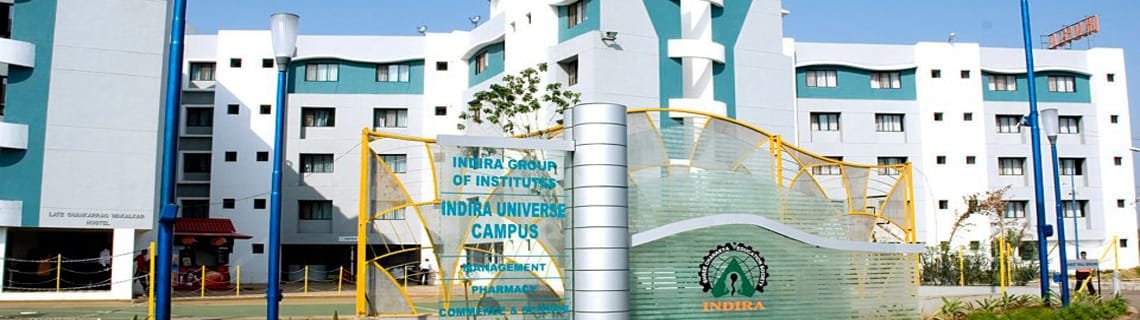
ISBS Pune Campus
Indira School of Business Studies Pune (ISBS Pune) – Complete Admission, Courses, Placement and Campus Guide
Indira School of Business Studies Pune, popularly known as ISBS Pune, is one of the visible names among private management institutes in Pune for students looking for a career-oriented PGDM education. Located in Tathawade, Pune, the institute has built a recognizable presence in the management education landscape through its emphasis on industry alignment, placement readiness, employability enhancement, and specialization-based business learning. The institute presents itself as a business school created to bridge the gap between the campus and the corporate world, a positioning that resonates strongly with students who want practical management education rather than only classroom theory. The official institute website identifies ISBS as a PGDM-focused institution with AICTE-approved programs, and it highlights specialization options, placement support, industry exposure, and structured career-building initiatives.
For many MBA/PGDM aspirants, the choice of a business school today is not based only on a degree or diploma. Students and parents are increasingly evaluating whether a college can actually help a student become more employable, more confident, more industry-aware, and more professionally prepared. In that context, ISBS Pune becomes relevant because it positions itself around exactly these expectations. It is marketed as a management institute where learning is intended to be practical, structured, and connected to real-world business roles.
A modern business school is expected to do much more than teach marketing, finance, HR, and operations. It should also help students improve communication, business understanding, presentation ability, role-readiness, and confidence under pressure. This is especially important for students who come from varied academic backgrounds and want a stronger professional identity before entering the job market. ISBS Pune appears to recognize this need and communicates its value through training-oriented language, industry-linked features, and employability support.
Another important factor behind the appeal of ISBS Pune is Pune itself. Pune is one of India’s most active higher education and early-career cities. It offers access to industries such as IT, BFSI, e-commerce, manufacturing, logistics, consulting, retail, and startups. This creates a supportive ecosystem for management students because internships, guest lectures, company interactions, and placement opportunities become easier to access in a city with strong corporate density.
For students seeking a PGDM college in Pune that combines academic structure with practical orientation, ISBS Pune is often considered a serious option. Whether it is the right fit depends on the student’s goals and expectations, but it certainly deserves a close look among private B-schools in Pune.
Quick Highlights of ISBS Pune
Particular
Details
College Name
Indira School of Business Studies Pune
Popular Name
ISBS Pune
Full Form
Indira School of Business Studies
Location
Tathawade, Pune, Maharashtra
Address
‘Abhinavan’, 89/2A, New Pune-Mumbai Highway, Tathawade, Pune – 411033
About ISBS Pune: Institutional Identity, Legacy and Positioning
ISBS Pune is part of the broader Indira educational ecosystem, which has established strong visibility in the Pune region over the years. Within that broader group, ISBS is positioned specifically as a business studies and PGDM-focused institution. Its official site explicitly states that it was established as a professional school to meet the growing needs of the business sector, with the stated aim of narrowing the gap between “Campus and Corporates.” This is a useful and meaningful positioning because it reflects one of the biggest challenges in management education: students often graduate with academic knowledge but without enough workplace readiness. ISBS appears to have built its identity around solving that gap.
This matters because management education works best when it is not treated as an academic formality but as a transformation process. Students typically join a B-school with mixed levels of confidence, communication, business awareness, and professional exposure. A good institute is expected to strengthen all of these areas over time. ISBS Pune’s institutional communication suggests that it sees itself not just as a PGDM provider, but as a career-shaping environment.
The institute also highlights features such as international business exposure, employability enhancement programs, placement support, and industry-oriented learning. These are important signals because they suggest that the school wants to compete not only on curriculum but also on outcome. In a crowded management education market, this kind of positioning often matters more than generic branding.
Students often underestimate how much institutional culture affects their final outcome. A business school that pushes students toward presentations, projects, internships, networking, and interview preparation tends to create stronger role-readiness than one that only completes the syllabus. For that reason, the overall character of ISBS Pune may appeal particularly to students who are looking for a practical and career-conscious management environment rather than a purely academic one.
Why Students Choose ISBS Pune
Students usually shortlist ISBS Pune for a combination of practical and aspirational reasons. Some are attracted by its PGDM-specific identity, others by its Pune location, while many are drawn by its public emphasis on placements, employability, industry exposure, and specialization-focused training.
One of the biggest reasons students choose ISBS Pune is because they are looking for more than a management qualification. They want a college that can help them become:
more employable,
more confident,
more corporate-ready,
and better prepared for recruiter expectations.
The official website of ISBS Pune supports this perception by highlighting features such as the Indira Employability Skill Enhancement Program (IESEP), 100% placement record claims, and industry exposure initiatives. While aspirants should always verify the latest details directly with the institute, these signals clearly show that the school is trying to position itself as a job-oriented business school rather than a purely theoretical one.
Another reason students consider ISBS Pune is the structure of PGDM itself. Many aspirants prefer PGDM over more conventional management formats because PGDM institutes often have greater flexibility to align teaching with current industry needs. This is especially useful in fields such as:
digital marketing,
business analytics,
BFSI roles,
HR operations,
consulting support,
and supply chain management.
Aspirants also tend to value colleges that have a clear business-school atmosphere. This includes not only subjects and classes but also exposure to recruiters, events, peer learning, workshops, internships, and corporate culture. ISBS Pune appears to actively promote this kind of environment, which is why it often appears in the shortlist of students comparing PGDM colleges in Pune.
Programs and Courses at ISBS Pune
ISBS Pune is primarily known for its AICTE-approved PGDM program. The official institute site presents PGDM as the flagship academic offering and states that the program is intended to equip students with the knowledge, problem-solving mindset, and business understanding needed in a competitive corporate environment. It also mentions an intake of 180 seats for the PGDM program and identifies key specialization areas.
For students, the strength of a management institute lies not just in whether it offers a PGDM, but in whether that PGDM is structured in a way that supports real career pathways. The ISBS Pune program appears to be designed around both foundational business learning and specialization-led role preparation.
Major Specializations Mentioned by ISBS Pune
Finance
Marketing
Human Resource Management
Operations & Supply Chain Management
The institute also mentions PGDM – General and PGDM – Marketing as course formats on its official page, indicating that students may be able to pursue either a broader management pathway or a more specialization-driven route depending on the current batch structure and program design.
This matters because today’s job market is role-specific. Students are not simply applying for “management jobs”; they are preparing for clearly defined roles such as:
business development executive,
management trainee,
financial analyst,
HR associate,
marketing executive,
supply chain coordinator,
operations analyst,
or sales and channel management roles.
A good PGDM program should therefore help students understand both broad management concepts and the specific realities of the domain they want to enter.
For example:
A Marketing student may target brand support, sales strategy, market research, product marketing, digital marketing, or business development roles.
A Finance student may prepare for BFSI, financial operations, analysis, fintech support, credit processing, or accounting-linked corporate functions.
An HR student may align with talent acquisition, employee engagement, recruitment coordination, HR operations, and people-process roles.
An Operations & Supply Chain student may move toward logistics, procurement, planning, warehouse coordination, and operational support functions.
Courses & Specializations
Program / Area
Description
PGDM
Two-year postgraduate diploma in management focused on business and employability
PGDM – General
Broad management learning with specialization pathways
PGDM – Marketing
Marketing-focused management pathway
Finance
Financial systems, BFSI, analysis, operations and business finance roles
Marketing
Sales, branding, market development, digital and customer-oriented roles
Human Resource Management
Recruitment, HR operations, people management and talent functions
Operations & Supply Chain Management
Logistics, process flow, planning, sourcing and operations support
Academic Structure and Learning Experience at ISBS Pune
A management program becomes valuable only when students can apply what they learn. Business education is not meant to remain limited to books, definitions, and classroom notes. It should help students think through ambiguity, communicate ideas, solve practical problems, and function effectively in a team-oriented, deadline-driven environment.
ISBS Pune appears to position its PGDM program around this philosophy. Its official communication emphasizes agile thinking, problem-solving, and the need to equip students with the “right arsenal” before entering the corporate world. This is a useful way to frame management education because it reflects how modern recruiters actually evaluate candidates. Recruiters do not only ask whether a student knows a theory; they ask whether the student can explain, apply, analyze, present, and adapt.
The academic experience at a B-school like ISBS Pune is likely to be most effective when students engage actively with:
case studies,
presentations,
projects,
group assignments,
internships,
guest lectures,
and practical discussions.
These formats matter because most students entering PGDM come from very different undergraduate backgrounds. Some may have studied commerce, others engineering, BBA, arts, science, or computer applications. A strong business school must therefore create a common foundation while also pushing students toward specialization and role clarity.
The official website also signals that the institute tries to keep students “abreast of trends in the field,” suggesting a curriculum orientation that is expected to stay responsive to changing business realities. This is important because management education becomes outdated quickly if it is not connected to evolving market expectations. Whether in finance, HR, operations, or marketing, students today need exposure to current practices, not only classic frameworks.
Students who use the academic environment well usually gain the most from management education. That means showing up not just physically, but mentally: participating in class, volunteering for presentations, asking questions, taking internships seriously, and using every activity as career preparation.
Faculty, Mentoring and Academic Support
In management education, the quality of faculty support can shape the entire student experience. A good faculty member does more than explain chapters. They help students connect ideas to real business situations, think critically, improve assignments, and understand how classroom concepts relate to actual roles.
ISBS Pune’s public communication suggests that it wants to build a professional learning environment that is not limited to static academic delivery. The institute emphasizes its role as a bridge between business education and the business world, which indirectly places importance on how faculty and academic mentors support student development.
Faculty quality matters in several ways:
it improves conceptual clarity,
it strengthens specialization understanding,
it supports presentation and project quality,
it enhances interview preparation,
and it often shapes student confidence.
A marketing student, for example, benefits most when faculty can connect textbook models to actual market behavior, campaigns, and customer dynamics. A finance student needs classroom guidance that links theory with real corporate functions and financial decision-making. Similarly, HR and operations students benefit when academic content is translated into real workplace systems, people challenges, and process frameworks.
Mentoring is equally important. Many students enter PGDM without full clarity about:
which specialization to choose,
what kind of internships to pursue,
how to build a resume,
how to prepare for placements,
and which roles suit their strengths.
Institutes that provide meaningful mentoring during these transitions often create stronger student outcomes than those that focus only on academic administration.
Industry Exposure and Corporate Orientation at ISBS Pune
One of the strongest expectations students have from a private business school is industry exposure. This is especially important in management education because business understanding cannot be built through theory alone. Students need repeated interaction with real-world business language, business expectations, and business problem-solving.
ISBS Pune clearly tries to build its identity around this dimension. The official site highlights:
International Business Exposure Program
Indira Employability Skill Enhancement Program (IESEP)
placement-linked training,
and a general focus on industry readiness.
This is meaningful because industry exposure improves:
confidence,
business vocabulary,
role understanding,
internship performance,
and placement readiness.
A student who regularly participates in industry-facing activities tends to become more employable than a student who only studies for internal exams. This is because recruiters usually assess not only what students know, but how they think, how they speak, and how they behave in professional situations.
Business schools that support exposure through:
guest lectures,
company talks,
workshops,
simulations,
live projects,
and domain sessions
often help students transition more smoothly into the job market.
This is also where students must play an active role. Even if a college provides opportunities, the value comes only when students attend, listen carefully, ask good questions, and use those interactions to sharpen their career direction.
Placements at ISBS Pune
Placements are one of the most important decision-making factors for MBA and PGDM aspirants. For many students, the final question is simple: Will this college help me get a meaningful job? That is why placement discussions should always go beyond brochure claims and focus on role quality, domain fit, recruiter spread, and student readiness.
ISBS Pune prominently emphasizes placements in its official communication. The official PGDM page highlights a “100% Placement Record” claim and also references 350+ companies on campus annually, Average CTC of 7.6 LPA, and Highest CTC of 16.3 LPA on the currently indexed page. However, third-party college portals show different placement figures across different years and program pages—for example, some mention an average in the ₹6.5–6.8 LPA range and highest packages ranging from ₹16.42 LPA to ₹21 LPA depending on the batch and source. Because placement data can vary by year, course, and reporting method, students should verify the latest official batch-wise placement report directly with the institute before admission.
The most useful way to evaluate placements is not by looking only at the highest package. Students should instead ask:
What roles are students actually getting?
Are placements aligned with specialization?
What percentage of students receive core domain roles?
Which sectors recruit consistently?
How many recruiters come for internships and final placements?
What kind of placement training is provided?
These questions reveal far more about the true value of a business school than headline salary numbers alone.
A healthy placement ecosystem usually includes opportunities across:
BFSI,
sales and marketing,
digital business,
HR and talent roles,
operations and logistics,
customer success,
analytics support,
management trainee pathways,
and consulting or service-linked profiles.
Students should also understand that placements are a shared outcome. The institute can provide recruiters, training, and process support—but the final result also depends on the student’s communication, consistency, specialization clarity, internship seriousness, and interview performance.
Placement Overview
Placement Factor
Why It Matters
Recruiter Diversity
Indicates the range of sectors and job roles available
Average / Median Package
Useful for ROI understanding, but should be verified carefully
Highest Package
Good for visibility, but not the only indicator of value
Role Quality
More important than headline package figures
Specialization Fit
Whether jobs match Marketing, Finance, HR, Operations, etc.
Placement Training
Includes aptitude, GD, PI, resume, and communication support
Internship-to-Placement Pipeline
Often influences final hiring outcomes
Placement-related facts above are sourced from the official institute page and third-party education portals; students should verify the latest admission-year data directly.
Internships and Employability Development
Internships are one of the most important parts of a management education. A student may study multiple business concepts in class, but internships are where those concepts are tested against real deadlines, real supervisors, real teams, and real expectations.
ISBS Pune appears to place visible emphasis on employability-building and career preparation. The official site highlights the Indira Employability Skill Enhancement Program (IESEP) as one of its featured strengths. Third-party education summaries also mention that the placement cell engages in summer internship training, live projects, and interactive training sessions, which suggests that the institute sees internship exposure as a key part of its student development process.
Internships matter because they help students:
test whether their chosen specialization is actually the right fit,
understand how organizations function,
gain practical confidence,
strengthen resumes,
build better placement stories for interviews.
For example:
A marketing student may work on lead generation, campaign execution, digital support, or business development.
A finance student may assist with reporting, analysis, operations, insurance, or banking workflows.
An HR student may support recruitment drives, onboarding, payroll coordination, or employee engagement.
An operations student may contribute to logistics, vendor coordination, procurement support, or process management.
Students who take internships seriously often perform much better in final placements because they can speak more confidently and credibly during interviews.
Campus Infrastructure at ISBS Pune
Infrastructure is not only about buildings; it is about whether the environment supports serious business-school learning. A management institute should ideally provide spaces where students can learn, collaborate, present, network, and prepare for corporate life.
ISBS Pune is located at Tathawade, Pune, in a region that has become increasingly active as an education and student hub. The official site provides a clear campus address and dedicated contacts for admissions, placements, examinations, and general inquiries, which suggests an institution with defined operational structure and multiple support functions.
For a management student, useful campus infrastructure usually includes:
classrooms that support discussion and presentation,
library or academic resource access,
seminar and event spaces,
placement support offices,
faculty interaction spaces,
and student convenience facilities.
Even when infrastructure is not the primary reason to choose a B-school, it influences daily learning quality more than many students realize. Business school learning is highly interactive. Students are expected to speak, debate, present, discuss, and work in teams. A campus that supports these activities can contribute directly to confidence and engagement.
Outstation students should also evaluate practical factors such as:
commute convenience,
hostel or nearby accommodation,
food access,
safety,
and ease of access to internship locations or recruiter zones within the city.
Campus Facilities
Facility / Environment
Student Benefit
Pune Location
Access to corporate exposure, internships, and business ecosystem
Dedicated Academic Setup
Better support for structured PGDM delivery
Placement Contact & Support
Useful for campus hiring and recruiter coordination
Learning Spaces
Important for presentations, discussions, and classroom participation
Student Support Functions
Helpful for admissions, academics, and administrative clarity
Accessibility
Useful for students coming from outside Pune
Urban Education Ecosystem
Adds value to the overall management education experience
Campus location and official institutional contact details are sourced from the institute’s official contact page.
Student Life at ISBS Pune
Student life in a business school plays a major role in shaping confidence, communication style, adaptability, and leadership ability. A student may join a PGDM program with only moderate confidence, but if the campus culture pushes them into active participation, they often graduate as far more employable professionals.
At a management institute like ISBS Pune, student life is likely to involve far more than classes alone. It usually includes:
presentations,
group projects,
specialization discussions,
industry sessions,
interview preparation,
peer collaboration,
and exposure to a professional campus atmosphere.
The value of such an environment is that it helps students begin behaving like business professionals before they formally enter the workforce.
In most management institutes, the students who benefit the most are not necessarily the toppers, but the ones who participate actively. They take ownership of projects, ask questions, improve their speaking ability, work on internships, and build their resumes consistently. If ISBS Pune’s employability and corporate-readiness positioning is used seriously by students, it can contribute meaningfully to their development over two years.
Student life also matters because recruiters often look for more than marks. They notice:
confidence,
clarity of thought,
communication,
teamwork,
initiative,
and professional discipline.
These qualities are usually built through the total B-school experience, not only through academic performance.
Admission Process at ISBS Pune
Admission to a management institute should always be approached strategically. Students should not only ask whether they can secure a seat, but whether the institute is the right match for their career goals, budget, specialization interest, and long-term employability expectations.
ISBS Pune officially offers admissions to its PGDM program, and the institute provides dedicated admission contact channels for interested applicants. The official PGDM page presents the program as a professional management pathway designed to prepare students for business careers.
In general, students applying to management colleges should assess:
eligibility,
entrance profile,
communication readiness,
specialization fit,
budget,
placement expectations,
and ROI.
A smart student should also ask:
What kind of peer group will I study with?
Is the program more academic or more industry-oriented?
How serious is the placement process?
What support will I receive for internships and interviews?
Will this college help me improve from where I am today?
These questions are much more useful than simply asking whether a college is “good” or “bad.”
Who Should Consider ISBS Pune?
ISBS Pune may be suitable for:
fresh graduates looking for a practical PGDM,
students wanting management education in Pune,
aspirants who value employability and placement support,
candidates interested in Marketing, Finance, HR, or Operations,
students who are willing to work actively on their professional development.
Who Should Evaluate Carefully?
Students should think carefully if they:
want only a highly academic or research-led environment,
are not serious about internships or placements,
expect top-tier outcomes without strong self-effort,
or are still unsure whether management is the right career path.
That does not automatically make the institute unsuitable, but it does mean expectations should be aligned honestly before admission.
Admission Planning
Admission Factor
Why It Matters
Program Fit
PGDM should align with your long-term career goals
Specialization Interest
Important for role targeting and internship planning
Budget & ROI
Must be evaluated carefully before taking admission
Placement Support
One of the biggest practical decision factors
Peer Group
Strong peer learning can significantly improve outcomes
Campus Environment
Influences confidence, routine, and engagement
City Advantage
Pune adds value through exposure and opportunities
Why Pune Adds Value to ISBS Pune
The city around a business school often matters almost as much as the school itself. A management institute located in an active business and education hub gives students a better chance to access internships, company interactions, and professional opportunities.
Pune remains one of India’s most attractive cities for higher education and early-career growth. It offers a balanced environment of:
academic institutions,
IT companies,
manufacturing clusters,
startups,
BFSI activity,
and service sector employment.
For PGDM students, this creates real advantages:
easier access to internships,
better corporate interaction opportunities,
more exposure to live business environments,
and stronger networking potential.
ISBS Pune benefits from being part of this larger ecosystem. Students who use the city well—through internships, events, networking, and exposure—often gain far more from their PGDM than students who remain passive.
ISBS Pune and Career Development
Career development in a B-school should begin from the first term, not just during final placement season. Students who treat the PGDM journey as a two-year professional transformation often get much better results than those who focus only on attendance and exams.
ISBS Pune’s public-facing identity strongly aligns with this idea. The repeated emphasis on employability enhancement, corporate readiness, and placement orientation suggests that the institute wants to be evaluated not only by curriculum but by how effectively it prepares students for the market.
A serious student at ISBS Pune should ideally spend the two years building:
communication fluency,
resume quality,
specialization depth,
business awareness,
Excel and presentation skills,
internship credibility,
and interview confidence.
These are the real drivers of employability in management education. A student with average academics can still become highly employable if they use the ecosystem seriously and remain disciplined throughout the program.
Final Verdict: Is ISBS Pune a Good Choice for PGDM?
Indira School of Business Studies Pune (ISBS Pune) appears to be a career-oriented PGDM institute designed for students who want a business-school-style learning environment with visible emphasis on:
practical management education,
employability enhancement,
specialization-driven learning,
placement orientation,
and corporate readiness.
Its strengths lie in its PGDM identity, Pune location, industry-oriented branding, specialization options, and structured focus on student employability. The institute’s official communication makes it clear that it wants to be seen as a place where students are prepared for the transition from college to corporate life.
That said, the right fit always depends on the student. If you are looking for:
a PGDM college in Pune,
a management program with practical orientation,
a business-school environment,
and a platform where your own effort can convert into career growth,
then ISBS Pune is definitely worth evaluating seriously.
But if you are making a final admission decision, do not rely only on brochure claims. Compare alternatives, verify the latest placement details, and align the college with your own goals and budget.
That is how you make a management education decision that actually works in the long run.
What is the full form of ISBS Pune?
The full form of ISBS Pune is Indira School of Business Studies.
Where is ISBS Pune located?
ISBS Pune is located at ‘Abhinavan’, 89/2A, New Pune-Mumbai Highway, Tathawade, Pune – 411033, Maharashtra.
Is ISBS Pune AICTE approved?
Yes, the official website states that its PGDM programs are AICTE-approved.
Which specializations are offered at ISBS Pune?
ISBS Pune officially mentions Finance, Marketing, Human Resource Management, and Operations & Supply Chain Management as key specialization areas.
Is ISBS Pune good for placements?
ISBS Pune actively highlights placements, recruiter participation, and employability support. Students should verify the latest official batch-wise placement details before taking admission.
Why do students choose ISBS Pune?
Students typically choose ISBS Pune for its PGDM identity, Pune location, employability orientation, specialization options, and business-school learning environment.