Address-:S.No. 52/53, Jhambe Road, Pune Mumbai
Expressway, Punawale, Pune, Maharashtra 411033
Phone No.,9811004275, 9250376104
Website-:www.lotuscentre.ac.in
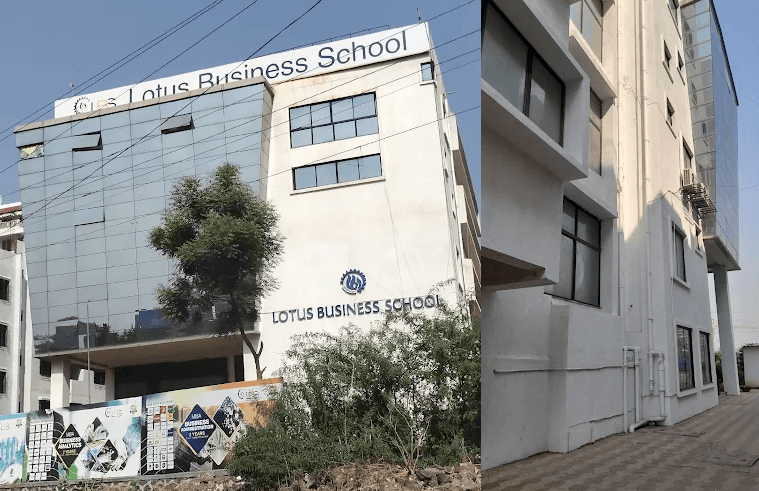
Lotus Business School Pune | LBS Pune
Lotus Business School Pune (LBS Pune) is one of the known private management institutes in Pune for students who are looking for a career-focused MBA or PGDM experience in a city that is widely regarded as one of India’s strongest education and employment hubs. Pune has steadily developed a reputation for being a student-friendly city with a strong mix of academic institutions, startup culture, manufacturing industries, IT parks, and service-sector growth. In that context, management aspirants often look at colleges not only from the lens of academic learning but also from the perspective of practical exposure, internships, industry interaction, employability, and return on investment. This is where Lotus Business School Pune becomes relevant for many students planning management education in Maharashtra.
LBS Pune is generally considered by candidates who want a professional business education environment, a career-oriented curriculum, and access to a city where multiple industries create opportunities for internships, live projects, and placements. Students often search for Lotus Business School Pune admission 2026, LBS Pune fees, Lotus Business School Pune placements, and Lotus Business School Pune MBA specializations before making a decision. A good college page should therefore answer these questions in a structured and transparent way.
One of the reasons students shortlist LBS Pune is the growing demand for management education that is not limited to textbook theory. Today’s MBA and PGDM aspirants want a program that helps them build employability through business communication, presentations, analytics exposure, case-based learning, summer internships, interview preparation, and specialization-based career readiness. Institutes that can bridge the gap between classroom learning and industry expectations tend to attract students from commerce, management, engineering, science, and even humanities backgrounds.
Lotus Business School Pune is usually evaluated on parameters such as course offerings, fee structure, specializations, industry exposure, faculty support, placement assistance, and campus environment. For students from Pune, Mumbai, Nashik, Nagpur, Aurangabad, Delhi NCR, Uttar Pradesh, Bihar, Madhya Pradesh, and other regions, Pune remains a strong destination because of its academic ecosystem and manageable student lifestyle compared to some larger metro cities.
Another important factor in choosing a business school is clarity around admission eligibility, entrance exam acceptance, and selection process. Students preparing for CAT, CMAT, MAT, XAT, ATMA, GMAT, or MAH MBA CET often look for institutes where their score can be used meaningfully in the admissions process. Along with this, they also want to understand whether the institute values academic consistency, communication skills, personal interview performance, and career intent.
From a career planning perspective, LBS Pune becomes relevant for students who are aiming for domains such as Marketing, Finance, Human Resources, Business Analytics, Operations, Supply Chain, Agri-Business, Pharma & Healthcare Management, and sector-specific management careers. For many aspirants, the right management institute is not only about brand name; it is also about how effectively the college can support them in building a practical, job-ready profile over two years.
This detailed page is designed to help students, parents, and education researchers understand the most important aspects of Lotus Business School Pune (LBS Pune) in a clear, student-friendly, and search-friendly way. It covers admission, fees, eligibility, courses, placements, infrastructure, faculty, entrance exams, student suitability, and frequently asked questions so that your decision-making process becomes easier and more informed.
Quick Facts: Lotus Business School Pune (LBS Pune)
| Particular | Details |
|---|---|
| College Name | Lotus Business School Pune |
| Popular Name | LBS Pune |
| Location | Punawale, Pune, Maharashtra |
| Establishment | Commonly listed as 2008 / 2011 across sources; verify from institute before publishing |
| Institute Type | Private Business School |
| Courses Offered | MBA / PGDM and specialization-based management programs |
| Popular Streams | Marketing, Finance, HR, Business Analytics, Operations, Supply Chain, Sectoral Management |
| Admission Mode | Entrance Exam + PI / Profile-Based Selection |
| Commonly Accepted Exams | CAT, CMAT, XAT, MAT, ATMA, MAH MBA CET, and others as applicable |
| Campus Advantage | Pune academic and corporate ecosystem |
| Official Website | Verify from institute website before final publication |
| Student Suitability | MBA/PGDM aspirants looking for industry-oriented management education |
Some details like establishment year, exact intake, fee breakup, and placement figures can vary by course and admission cycle, so they should be verified before final publishing. LBS is commonly listed as being in Punawale, Pune, offering management programs and admission through common MBA entrance exams.
Why Students Consider Lotus Business School Pune
When students shortlist management colleges in Pune, they generally compare institutes on four major factors: location, industry exposure, specialization options, and career outcomes. Lotus Business School Pune enters the shortlist of many candidates because it sits in a city where management education naturally benefits from the presence of IT companies, manufacturing firms, startups, service-sector employers, consulting roles, and regional corporate offices.
The first advantage of Pune as an MBA/PGDM destination is that it supports students beyond academics. A management student needs more than classrooms. They need internships, competitions, workshops, guest lectures, networking opportunities, and professional confidence-building. Being in Pune often gives students better access to such ecosystem-level opportunities compared to smaller education markets.
The second reason students consider LBS Pune is specialization relevance. In today’s job market, students increasingly want a degree that aligns with a career path. A generic management degree may still be useful, but a program that allows a student to build competency in a specific function—such as Finance, HR, Marketing, Analytics, or Operations—often creates better clarity and employability. Lotus Business School Pune is usually explored by students who want both foundational management knowledge and role-specific learning.
The third important factor is practical readiness. Students and parents today are much more aware than before. They don’t just ask, “Which college should I join?” They ask, “What skills will I gain there?” This shift is significant. Management education today must prepare students for Excel-based decision-making, data interpretation, presentation skills, business communication, problem-solving, teamwork, interview performance, and industry etiquette. Any college that can help students build these capabilities becomes more relevant than one that only focuses on traditional classroom teaching.
A fourth reason why students look at LBS Pune is because not every student is targeting only elite Tier-1 institutions. Many candidates are looking for colleges that can offer a balanced mix of affordability, practical exposure, accessible admissions, and decent career support. Such students often want an institute where they can grow consistently over two years through faculty guidance, project work, certifications, internships, and placement preparation.
Another major decision factor is peer environment. Business schools are shaped not only by faculty and curriculum but also by the quality and seriousness of the student cohort. Students usually perform better in institutes where there is healthy competition, participation in presentations and projects, and a culture of professional development. In management education, peer learning matters because class discussions, group assignments, and presentation-based evaluation often shape the learning process.
For students from non-metro or non-management backgrounds, Lotus Business School Pune may also appear attractive because Pune as a city often provides a smoother transition into management education. It is academically active, student-oriented, and relatively more familiar to many aspirants from Maharashtra and nearby states.
In short, students generally consider Lotus Business School Pune for a combination of location advantage, specialization-based education, practical management training, and career-focused learning. The real value of any business school, however, lies in how effectively a student uses the two-year period to build a strong professional profile.
Lotus Business School Pune Courses and Specializations
Management aspirants often make the mistake of selecting a college before selecting the right specialization. In reality, both decisions should go together. The course structure and specialization options available at a business school directly affect your internship path, final placement roles, skill development, and long-term career direction. That is why understanding the academic offerings of Lotus Business School Pune is essential before applying.
LBS Pune is commonly known for management programs in core and emerging business domains. Across public listings and institute-linked pages, Lotus Business School is associated with management offerings including MBA and specialization-oriented programs. Different sources mention streams such as Marketing, Human Resource Management, Business Analytics, Operations & Supply Chain Management, Tourism & Hospitality, and sectoral management areas.
A good business school curriculum should ideally include three academic layers. The first is management fundamentals, where students learn the building blocks of business such as accounting, economics, organizational behavior, business communication, marketing fundamentals, financial management, and operations basics. The second layer is specialization learning, where students move into domain-specific subjects. The third layer is applied industry learning, where classroom concepts are tested through projects, presentations, internships, simulations, and case studies.
At Lotus Business School Pune, students generally evaluate courses based on employability relevance. For example:
- Students interested in brand building, sales, digital marketing, customer acquisition, and market strategy often prefer Marketing.
- Students who are analytical and numbers-oriented may prefer Finance or Business Analytics.
- Students interested in recruitment, training, organizational culture, employee engagement, and workplace behavior often consider Human Resource Management.
- Students who are process-driven and interested in logistics, planning, procurement, and efficiency often explore Operations & Supply Chain Management.
- Students targeting niche industries may also consider domain-specific programs depending on the latest course availability.
A strong management program should also expose students to practical tools and frameworks. For example, a student specializing in Business Analytics should ideally gain exposure to data interpretation, dashboards, spreadsheets, reporting, and analytical thinking. Similarly, a student specializing in Marketing should ideally work on case presentations, campaigns, sales strategy, branding exercises, and market research assignments.
The best way to choose a specialization at LBS Pune is not by trend alone, but by aligning three things: your aptitude, your long-term career interest, and the kind of roles you want after graduation. Students often choose Business Analytics because it sounds modern, but if they are not comfortable with data and structured problem-solving, they may perform better in Marketing or HR. Likewise, students who choose Finance purely for prestige may struggle if they do not enjoy numbers, valuation, reporting, or analytical detail.
The two-year management journey becomes much more effective when students enter with some clarity. If your goal is not fully clear, that is okay—but you should at least identify the type of work environment you imagine for yourself. Would you enjoy client-facing work, data-heavy work, people-centric roles, process management, or sector-specific leadership tracks? The answer often helps identify the right specialization.
Courses & Specializations
| Course / Program Type | Duration | Typical Focus Area | Best Suited For |
|---|---|---|---|
| MBA / Management Program | 2 Years | Core management + specialization | Students seeking a recognized management pathway |
| Marketing Management | 2 Years | Branding, Sales, Market Strategy, Consumer Behavior | Communication-driven, target-oriented students |
| Finance Management | 2 Years | Corporate Finance, Analysis, Banking, Reporting | Number-oriented, analytical students |
| Human Resource Management | 2 Years | Recruitment, L&D, HR Strategy, Employee Engagement | People-focused, communication-oriented students |
| Business Analytics | 2 Years | Data Interpretation, Reporting, Business Insights | Analytical and tech-comfortable students |
| Operations & Supply Chain | 2 Years | Procurement, Logistics, Planning, Process Efficiency | Process-oriented and system-thinking students |
| Sector-Specific Management | 2 Years | Industry-oriented management pathways | Students targeting niche sectors |
Lotus Business School Pune Admission 2026
Admission is one of the most searched topics for any management college, and rightly so. Students want clarity on whether they are eligible, what entrance exams are accepted, how selection happens, and whether profile factors such as academics and interview performance matter. When it comes to Lotus Business School Pune admission 2026, candidates should approach the process with preparation rather than assumption.
Most management institutes follow a structured selection process that generally includes academic eligibility, entrance exam score, application review, and personal interaction rounds. Lotus Business School Pune is commonly associated with accepting scores from standard management entrance exams such as CAT, CMAT, XAT, MAT, ATMA, and MAH MBA CET, though accepted tests may vary by course and admission year.
The first step in admission is usually meeting the basic academic eligibility criteria, which commonly includes a bachelor’s degree with at least 50% marks for general-category candidates (and relaxation as per applicable norms where relevant). Public course listings for LBS Pune also indicate graduation-based eligibility around this level for several programs.
After eligibility, the next major factor is the entrance score. However, students should understand an important truth: at many management colleges, the entrance score is not the only factor. A moderate score combined with good communication, clear career intent, decent academics, and strong interview performance can often strengthen your overall application.
The personal interview stage is especially important. Business schools want to evaluate whether you have clarity, confidence, communication ability, and readiness for a professional management environment. Students should prepare for questions such as:
- Tell us about yourself.
- Why MBA / PGDM?
- Why Lotus Business School Pune?
- Why this specialization?
- What are your strengths and weaknesses?
- What are your short-term and long-term career goals?
- Questions from graduation subjects or current affairs.
Students from engineering, B.Com, BBA, B.Sc., BA, pharmacy, agriculture, hospitality, or technical backgrounds can all pursue management education, but they should tailor their answers based on their academic journey and future goals.
A strong application to LBS Pune should ideally include:
- Good academic honesty and documentation
- A valid entrance score
- A clear reason for pursuing management education
- Basic awareness of the chosen specialization
- Readiness to explain career goals logically
One of the most overlooked parts of admission is timing. Students who apply early often get better visibility into seat availability, counseling support, and sometimes scholarship or merit-linked opportunities if available. Waiting too long can reduce options and create unnecessary pressure.
For students planning MBA admission in Pune 2026, Lotus Business School Pune may be considered by candidates who want a career-focused private management institute in a strong education city. But the final decision should always come after checking latest fee details, specialization availability, placement support, and student fit.
Admission 2026: LBS Pune
| Admission Component | Likely Requirement / Process |
|---|---|
| Academic Eligibility | Graduation from a recognized university |
| Minimum Marks | Usually 50% aggregate in graduation (verify category-wise relaxation) |
| Entrance Exams | CAT / CMAT / XAT / MAT / ATMA / MAH MBA CET / others as applicable |
| Selection Process | Application + Score Review + PI / GD / Counseling (as applicable) |
| Suitable Applicants | Freshers and graduates from multiple academic backgrounds |
| Application Timing | Early application recommended |
| Key Selection Factors | Academic profile, entrance score, communication, intent, interview |
Lotus Business School Pune Fees Structure
The fee structure of a business school plays a central role in admission decisions because students and parents are increasingly focused on return on investment (ROI). The question is no longer just “What is the total fee?” but also “What value do I get for that fee in terms of learning, exposure, internships, placements, and long-term career outcomes?”
Across public listings, Lotus Business School Pune fees are commonly shown in the range of approximately ₹5 lakh total for a two-year management program on some portals, though this may differ by course, batch, specialization, and latest institute revision. Because fee data changes frequently and may include or exclude various components, students should always verify the latest amount directly with the institute before making a final decision.
A business school fee should ideally be evaluated in five parts:
- Tuition Fee – the core academic cost
- University / Examination / Academic Charges
- Training / Certification / Industry Exposure Charges (if applicable)
- Hostel / Accommodation / Living Cost
- Opportunity Cost – what you are giving up to invest in a two-year degree
Students often focus only on tuition and ignore the cost of living, travel, laptop, certifications, internships, interview clothing, and other practical expenses. Pune, however, is generally considered manageable compared to some bigger metros, which can make the total student budget more predictable.
A good way to judge fee value is to ask:
- Does the college offer strong specialization support?
- Are there practical learning opportunities?
- Is placement preparation structured?
- Are internships and projects actively supported?
- Does the student cohort and faculty environment justify the cost?
An affordable fee is useful only if it leads to employability. On the other hand, a slightly higher fee may still make sense if the student receives meaningful outcomes. Therefore, fees should always be evaluated together with placements, specialization relevance, and student effort.
If you are creating a webpage for student leads, one of the most effective content strategies is to be transparent. Instead of claiming “low fees” or “best ROI,” it is better to explain what students should ask before paying any admission amount. That builds trust and improves conversion quality.
LBS Pune Fees (Indicative – Verify Before Publishing)
| Fee Component | Indicative Status |
|---|---|
| Tuition Fee (2 Years) | Commonly listed around ₹5,00,000 total on some portals |
| Registration / Application Fee | Verify with institute |
| Exam / Academic Charges | Verify with institute |
| Hostel / Accommodation | Verify separately |
| Security Deposit | Verify if refundable / non-refundable |
| Installment Facility | Check with admissions office |
| Education Loan Support | Ask institute / bank partner availability |
Public listings commonly mention an overall fee around ₹5 lakh for some management offerings, but students should verify the latest breakup directly with the institute before applying.
Lotus Business School Pune Placements
For most MBA and PGDM aspirants, placements are the most decisive factor. No matter how attractive a campus, brochure, or course name may look, the real test of a business school lies in how well it helps students become employable and secure relevant career opportunities. That is why Lotus Business School Pune placements remain one of the most searched and most important topics for prospective students.
The first thing students should understand is that placements are influenced by three forces working together:
- The college ecosystem
- The student’s specialization and skill level
- The student’s individual effort and consistency
No business school can guarantee the same outcome for every student, but a good institute can create a strong platform through training, mentoring, interview preparation, live projects, internships, and recruiter outreach. Lotus Business School’s own course-linked pages mention 100% placement assistance, which is an important distinction—students should interpret this as support and facilitation rather than a uniform outcome for all students.
Third-party public listings commonly mention an average package around ₹3.5 LPA for at least some LBS Pune program pages, though students should treat such figures as indicative rather than universal because salary data can vary by specialization, year, and reporting source.
A more useful way to assess placements is not to ask only, “What is the average package?” but also:
- What types of roles are offered?
- Are students placed in core domain roles or generic sales roles?
- Which specializations perform better?
- How strong is internship-to-placement conversion?
- What is the role of student performance in final outcomes?
Typically, students from Marketing may get opportunities in sales, business development, digital marketing, channel management, and client-facing roles.
Students from HR may target recruitment, talent acquisition, HR operations, and employee engagement roles.
Students from Finance may look toward banking support, financial analysis, relationship management, or back-office finance roles.
Students from Analytics may pursue MIS, reporting, business analysis support, operations analysis, or data-enabled decision support roles depending on their technical readiness.
Students from Operations & Supply Chain may explore planning, logistics, process support, procurement, and coordination roles.
The reality of management placements in India is that colleges can open doors, but students must walk through them with preparation. The highest-performing students are usually those who:
- Build strong communication skills
- Improve Excel / PPT / reporting ability
- Complete certifications aligned to their specialization
- Perform well in internships
- Prepare consistently for interviews and aptitude rounds
- Stay active in projects and presentations
For your webpage, it is also important to maintain credibility. Avoid exaggerated statements like “100% guaranteed high package” unless officially documented and legally safe to publish. Instead, use trust-building language such as:
“Placement outcomes depend on specialization, student performance, market conditions, and recruiter participation.”
This makes your content more EEAT-friendly and more believable to serious students.
Placement Snapshot : Lotus Business School Pune
| Placement Parameter | Student Guidance |
|---|---|
| Placement Support | Placement assistance is highlighted on institute-linked pages |
| Average Package | Public portal listing mentions approx. ₹3.5 LPA for at least one program page |
| Role Types | Marketing, HR, Finance, Analytics, Operations-related entry roles |
| Best Placement Strategy | Choose right specialization + build employability skills |
| Key Recruiter Fit | Depends on batch, specialization, and market demand |
| Student Success Factors | Communication, internships, projects, certifications, interview prep |
LBS-linked pages mention 100% placement assistance, and one public course page lists an average package of around ₹3.5 lakh for a program; exact placement outcomes should be verified with the institute for the latest batch and specialization.
Campus Life, Infrastructure and Learning Environment
A business school is not just a classroom—it is a two-year professional grooming environment. Students often underestimate how much their daily environment affects their confidence, communication, networking, and overall growth. That is why infrastructure and campus culture matter more than they appear to at first glance.
Lotus Business School Pune, being located in Punawale, Pune, benefits from a student-centric urban educational environment. An ideal management campus should support both academic and personality development. This includes classrooms, presentation spaces, library access, computer labs, Wi-Fi-enabled learning, faculty interaction, and opportunities for peer collaboration. Public descriptions of the institution also highlight resources such as library and computer facilities in various listings.
A strong MBA or PGDM environment should help students become comfortable with:
- Group discussions
- Business presentations
- Formal communication
- Teamwork under deadlines
- Time management
- Event participation
- Professional networking
These are not “extra” things—they are central to management education. Students who actively participate in college events, committee roles, case competitions, seminars, and guest lectures often graduate with a stronger profile than students who only attend lectures passively.
Another important factor is the peer environment. Management education is highly interactive. A student learns not only from faculty but also from class discussions, team assignments, project conflicts, and collaborative work. A healthy peer group often creates motivation, discipline, and practical learning.
Pune as a city also adds value to student life. Compared to smaller cities, Pune gives management students a better ecosystem for:
- Internships
- Industry exposure
- Networking events
- Professional workshops
- Startup awareness
- Better off-campus opportunities
For outstation students, lifestyle also matters. Students often prefer cities where they can study seriously while also managing cost, mobility, and comfort. Pune continues to remain a preferred city for that reason.
Infrastructure & Campus
| Campus Parameter | Why It Matters |
|---|---|
| Location in Pune | Access to academic and industry ecosystem |
| Classrooms | Better learning and presentation environment |
| Library | Important for management reading and research |
| Computer / Digital Access | Essential for analytics, projects, presentations |
| Peer Culture | Critical for MBA learning and networking |
| Industry Exposure Potential | Higher in a city like Pune |
| Student Activities | Builds confidence, leadership, and communication |
Who Should Consider Lotus Business School Pune?
Choosing a business school is not only about whether a college is “good” or “bad.” The more useful question is: “Is this college the right fit for me?” That question is often ignored, and many students regret their choice later not because the college was objectively poor, but because it was misaligned with their expectations, budget, or career style.
Lotus Business School Pune may be a reasonable option for students who fit one or more of the following profiles:
1) Students Looking for MBA/PGDM in Pune
If your priority is to study in Pune because of its academic ecosystem, placement environment, and student-friendly city life, LBS Pune naturally enters the comparison list.
2) Students Seeking Practical Management Education
If you are not looking only for a degree name but want exposure to presentations, projects, internships, and industry-oriented learning, a business school like LBS Pune may be relevant depending on your expectations and effort.
3) Students with Moderate Entrance Scores
Not every student has a top CAT percentile. Many capable students have average or moderate scores but strong communication potential, decent academics, and a genuine career goal. Such students often explore colleges like LBS Pune.
4) Students Who Want Functional Specialization
If you already know you are inclined toward Marketing, HR, Analytics, Finance, or Operations, then choosing a specialization-supportive institute matters more than blindly chasing brand labels.
5) Students Focused on Skill Building
Students who are willing to actively build their own profile through internships, certifications, presentations, and networking can often make stronger use of such institutes than passive learners.
At the same time, students should be realistic. If you are expecting a Tier-1 style recruiter ecosystem, top consulting roles, or elite brand pull, then your expectations should be calibrated accordingly. The best college choice is one that aligns with your current profile, budget, and growth plan.
How to Decide if LBS Pune is Right for You
Before taking admission anywhere, students should avoid emotional decisions and instead use a structured decision framework. Here is a practical way to evaluate Lotus Business School Pune:
Ask these 10 questions before admission:
- What is the exact course name and university/approval status?
- What specializations are available this year?
- What is the total payable fee including hidden charges?
- What is the latest placement support and role mix?
- Which entrance exams are accepted for my profile?
- What is the class profile like—freshers vs experienced students?
- How strong is internship support?
- What certifications or skill training are included?
- What is the refund policy if I withdraw?
- Does this college fit my career goal and budget realistically?
Students who ask these questions usually make better decisions than those who only compare brochures or social media claims.
Why This College Page is Useful for Students
A strong education webpage should not just rank on Google—it should also help the student make a better decision. That is where Generative Engine Optimization (GEO) and EEAT become important.
This content is intentionally designed to perform well for both:
- Search engines
- AI-generated answer systems
- Student decision-making journeys
It includes:
- Clear headings
- Search-friendly intent phrases
- Natural question-answer structure
- Human-readable explanations
- Comparison-ready sections
- Trust-building language
- Non-exaggerated placement framing
- Student-oriented clarity
That makes it more useful than thin affiliate-style content or copied college descriptions.
Lotus Business School Pune may be suitable for students looking for a private management institute in Pune with specialization-oriented learning and placement assistance. The final suitability depends on your budget, expectations, entrance score, and career goals.
Public listings commonly show fees around ₹5 lakh total for some management programs, but students should verify the latest fee structure directly from the institute before admission.
Lotus Business School Pune is commonly associated with accepting exams such as CAT, CMAT, XAT, MAT, ATMA, and MAH MBA CET, depending on the course and admission cycle.
Popular management streams associated with LBS Pune include Marketing, HR, Business Analytics, Operations & Supply Chain, and other management-focused pathways.
Placement outcomes depend on student performance, specialization, recruiter participation, and market conditions. Institute-linked pages mention placement assistance, while public listings show indicative average salary data for some courses.
Lotus Business School Pune is commonly listed in Punawale, Pune, Maharashtra.