Address: Survey No.64/65, Gat No. 276, AT/PO- Parandwadi, TAL-Maval, PUNE -410506 Mobile – 9811004275, 9250376104 Website:- www.indiraiimppgdm.edu.in
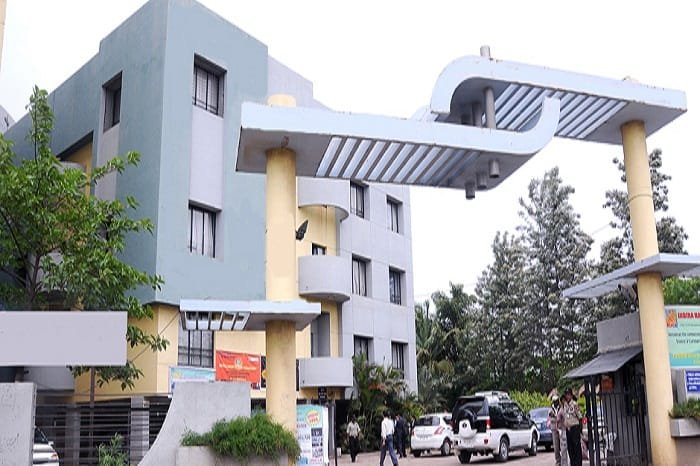
IIMP Pune Campus
Indira Institute of Management Pune (IIMP Pune) – Complete Admission, Courses, Placement and Campus Guide
Indira Institute of Management Pune, popularly known as IIMP Pune, is one of the better-known private management institutes in Pune for students seeking MBA, PGDM, and career-oriented business education. Located in the educational and industrial ecosystem of Pune, the institute has built visibility among management aspirants who are looking for a blend of academic learning, employability training, industry exposure, and professional development. The institute operates from Tathawade, Pune, and publicly presents itself as part of a legacy-driven educational group with a focus on management education, student transformation, and career readiness. The official institute site highlights MBA, BBA, Ph.D., and diploma offerings, while a dedicated PGDM site presents AICTE-approved PGDM programs, dual specialization options, and employability-oriented training.
For many students, choosing a management institute is not only about the degree or diploma but also about what the institute can help them become over two years. A modern business school is expected to do much more than teach subjects such as marketing, finance, and human resources. It must also help students build communication, confidence, analytical thinking, presentation ability, interview readiness, teamwork, and professional maturity. In this context, IIMP Pune often attracts students who want a more career-oriented management environment rather than a purely exam-based academic experience.
The value of a B-school today is increasingly judged by a combination of factors:
curriculum relevance,
faculty quality,
internship opportunities,
recruiter engagement,
specialization depth,
corporate exposure,
and overall student transformation.
Indira Institute of Management Pune attempts to position itself around these very expectations. Its official communication repeatedly emphasizes career development, industry readiness, employability enhancement, and management training. For students who are serious about building a practical management career, that positioning can make IIMP Pune a relevant name in the Pune MBA/PGDM ecosystem.
Another major reason why IIMP Pune remains visible among aspirants is the city of Pune itself. Pune has become one of India’s strongest educational and professional destinations, especially for students in business, technology, finance, and operations. It offers access to corporate offices, startups, manufacturing clusters, logistics hubs, IT companies, banking institutions, and service sector employers. This larger environment strengthens the value proposition of a management institute located in the city because students benefit not only from classroom learning but also from internships, guest lectures, industrial visits, and recruiter access.
For students planning management studies in Maharashtra or outside it, IIMP Pune is often evaluated as an institute that combines urban academic access, professional grooming, and management specialization pathways. Whether it is the right choice depends on the student’s goals, but it certainly deserves serious consideration among private MBA and PGDM colleges in Pune.
Quick Highlights of IIMP Pune
Particular
Details
College Name
Indira Institute of Management Pune
Popular Name
IIMP Pune
Location
Tathawade, Pune, Maharashtra
Address
85/5 A, Tapasya, New Mumbai Pune Highway, Tathawade, Pune – 411033
MBA/PGDM career development, placements, practical exposure
City Advantage
Pune corporate and educational ecosystem
Institutional Appeal
Professional development, specialization-based management learning
About IIMP Pune: Legacy, Identity and Institutional Positioning
Indira Institute of Management Pune is part of the broader Indira Group of Institutes, a name that has had long-standing visibility in the Pune education landscape. The institute’s official website frames its identity around “Three Decades of Academic Excellence & Career Enrichment”, positioning itself as an institution with educational continuity and structured development for students. This kind of institutional legacy can matter significantly to students and parents because it often signals stability, process maturity, and a stronger academic-operational setup.
What distinguishes many private business schools today is not simply the number of years they have existed, but the kind of student transformation they are able to deliver. IIMP Pune appears to market itself around the idea of career enrichment, which is a useful phrase in management education because it points toward outcomes beyond marks and attendance. A management student ideally needs to become employable, adaptable, articulate, and professionally aware. Institutions that structure their pedagogy around these outcomes tend to remain relevant even in competitive markets.
The institute also emphasizes industry professionals, expert networks, life at campus, and career development programming as part of its positioning. These are important markers because students evaluating business schools are usually looking for a place that can help them bridge the gap between academic life and corporate life. In that sense, IIMP Pune appears to present itself as a transition platform from graduation to professional employment.
A major strength of such institutions lies in their ability to create a learning culture where students are expected to participate actively rather than passively consume lectures. In management education, this means involvement in case studies, presentations, events, internships, discussions, field assignments, simulations, and career-preparation activities. A student entering a business school often starts with uneven confidence and limited exposure. A good institute is expected to close that gap over time.
For this reason, IIMP Pune is often not judged only on the basis of whether it offers an MBA or PGDM, but on whether it creates a structured and practical business-school environment. That is where its branding around employability, outcome-based learning, and professional development becomes especially important.
Why Students Choose IIMP Pune
Students usually shortlist IIMP Pune for a mix of practical and aspirational reasons. Some are attracted by its Pune location, others by its management-specific academic identity, while many are drawn to its placement-oriented branding, MBA/PGDM focus, and specialization opportunities.
One of the biggest reasons students consider IIMP Pune is because they are not looking only for a classroom-based management course. They want a platform that can help them improve:
communication,
confidence,
business awareness,
role readiness,
and placement potential.
The institute’s official sites place strong emphasis on these dimensions through terms like career development, employability skill enhancement, and outcome-based education. The PGDM-focused site specifically highlights the Indira Employability Skill Enhancement Program (IESEP), which suggests that student readiness for the job market is a visible part of the institutional promise.
Another reason students consider IIMP Pune is its range of management pathways. While many institutes are restricted to one conventional format, IIMP Pune publicly references MBA, PGDM, and related management-focused academic offerings. This broadens the institute’s appeal across different categories of aspirants—whether they are looking for a university-linked MBA route or a more industry-branded PGDM option.
There is also an important student psychology factor here. A large number of MBA/PGDM aspirants are not just choosing a college—they are choosing a second chance to define their career. Some may come from average undergraduate colleges, some may want a stronger first corporate role, and others may be looking to pivot into management after a non-management bachelor’s degree. Institutes like IIMP Pune become relevant for such students because they offer not only a qualification, but also the possibility of structured career repositioning.
Programs and Courses at IIMP Pune
Indira Institute of Management Pune has visibility across multiple academic categories, but for management aspirants the most relevant programs are its MBA and PGDM offerings. The official main website lists MBA among its core programs and also identifies specializations such as Marketing Management, Financial Management, Human Resource Management, and Business Analytics. The separate PGDM website presents PGDM as a flagship management pathway with a structured business-school orientation.
For a management aspirant, the difference between simply joining a course and joining the right course is substantial. The best-fit program depends on the student’s goals, budget, preferred pedagogy, specialization interest, and placement expectations. In the case of IIMP Pune, the institute’s offerings appear designed to serve both broad management learners and specialization-oriented students.
Major Management Programs/Pathways Associated with IIMP Pune
MBA
PGDM
PGDM (General / Dual Specialization pathways)
Specialization-focused management tracks
Specializations Commonly Associated with IIMP Pune
Marketing Management
Financial Management
Human Resource Management
Business Analytics
Operations / Supply Chain related exposure (via PGDM pages)
This combination matters because the job market today is increasingly role-driven. Students are no longer choosing only “management” as a generic degree; they are choosing a future in areas such as sales, digital marketing, finance, analytics, consulting support, HR operations, or supply chain. The more clearly a student can align their program with their intended career path, the better their outcomes are likely to be.
For example:
A Marketing student may aim for sales, digital campaigns, product marketing, market research, or business development.
A Finance student may move toward banking, insurance, fintech, financial operations, analysis, or corporate finance support.
An HR student may prepare for talent acquisition, employee engagement, HR operations, or learning and development roles.
A Business Analytics student may target data-driven business support roles, reporting, performance analysis, or business intelligence-related work.
This specialization-based structure makes IIMP Pune relevant to a broad base of management aspirants.
Courses & Specializations
Program / Area
Description
MBA
Management program with specialization-focused learning
Recruitment, HR processes, people management, workplace systems
Business Analytics
Data-driven decision-making, business insights, analytics orientation
Operations / Supply Chain Exposure
Process management, logistics, procurement and operational coordination
Academic Structure and Learning Experience at IIMP Pune
A strong management institute must offer more than lectures and semester exams. Today’s business environment demands professionals who can think, communicate, present, analyze, collaborate, and execute. That means a modern management education needs to combine conceptual knowledge with application and professional readiness.
IIMP Pune appears to align itself with this model through a learning environment centered around practical relevance, employability, and outcome-based education. Its PGDM-facing communication specifically uses phrases such as holistic education, multidisciplinary subjects, faculty mentoring, and outcome-based education, suggesting a pedagogy that aims to go beyond static classroom delivery.
For students, this kind of academic environment matters a lot. Most MBA/PGDM classrooms include learners from highly diverse academic backgrounds:
engineering,
commerce,
BBA,
arts,
science,
IT,
and even early work-experience profiles.
A good management program must therefore first create a strong common foundation in business thinking and then gradually move students into specialization depth. This process works best when institutes use a blended model of:
conceptual teaching,
case studies,
presentations,
practical assignments,
project-based learning,
internships,
and industry interactions.
Students benefit especially when the classroom is treated not as a passive lecture hall but as a simulation of the business world. Management students should be asked to think like managers: solve ambiguous problems, justify recommendations, interpret business situations, and communicate clearly under pressure. These habits often shape not only academic performance but also placement readiness.
The educational experience at IIMP Pune is likely to be most useful for students who are willing to participate actively. In business school, learning compounds when students contribute to class discussions, volunteer for presentations, take internships seriously, and continuously improve their communication and business awareness.
Faculty, Mentoring and Academic Support
Faculty quality is one of the most underestimated but most important aspects of management education. In a business school, students do not just need subject teachers—they need people who can translate concepts into practical decision-making and help them connect theory to career reality.
IIMP Pune’s institutional messaging places emphasis on learning from professionals and experienced academic contributors. Its public-facing content also refers to high-caliber industry professionals and faculty mentoring, which suggests that the institute wants to build credibility not only through curriculum but also through the people delivering it.
Good faculty support matters in several ways:
it improves conceptual clarity,
strengthens assignment quality,
supports specialization understanding,
improves presentation and project guidance,
and often influences placement preparation.
A student in finance, for example, may need help understanding not just formulas but also how financial concepts show up in business roles. Similarly, an HR student benefits when classroom discussions include real organizational scenarios, workplace dynamics, and current people-management trends. Marketing students gain the most when subjects are connected to real brands, consumer shifts, campaign strategy, and sales behavior.
The role of mentoring in a management institute is equally important. Students often need help with:
profile building,
specialization selection,
summer internship choices,
resume development,
interview confidence,
and role targeting.
An institute that actively mentors students through these transitions often creates better outcomes than one that limits itself to syllabus completion.
Industry Exposure and Corporate Orientation at IIMP Pune
One of the strongest reasons students choose private business schools is the expectation of industry exposure. This is especially true in management education because corporate understanding cannot be built from textbooks alone. Students need regular interaction with the language, expectations, and problem-solving culture of real organizations.
IIMP Pune appears to place a visible focus on this aspect. The institute’s websites highlight career development, industry-oriented training, international study tours, domestic industrial visits, and annual recruiter presence as part of the overall student experience. The PGDM site also positions itself as a school intended to bridge the gap between “Campus and Corporates.”
This matters because industry exposure can shape student development in multiple ways:
it improves understanding of business roles,
makes specialization choices more informed,
enhances placement conversations,
strengthens internship performance,
and gives students a more realistic view of corporate expectations.
Management students benefit significantly from:
guest lectures by industry leaders,
domain workshops,
business simulations,
live projects,
sector-focused discussions,
and practical assignments connected to real companies.
A student who regularly hears from recruiters, managers, founders, analysts, HR leaders, and consultants is more likely to understand what the market values. That awareness often improves everything from class participation to interview performance.
This is why the “corporate-readiness” promise of an institute should be taken seriously. It is not just a brochure phrase; it can become a decisive factor in how employable a student is after graduation.
Placements at IIMP Pune
Placements are one of the most decisive filters students use when evaluating a business school. For many families, the real test of a management institute is not just what it teaches, but whether students are able to convert their education into relevant employment.
IIMP Pune gives substantial importance to placements in its public communication. The PGDM website highlights 500+ companies on campus annually in one section, while another section references 350+ companies on campus annually, which indicates active recruiter positioning but also suggests students should verify the latest official batch-wise data directly before taking admission. The site also displays figures such as Average CTC 6.62 LPA, Median CTC 6 LPA, and Highest CTC 16.32 LPA on its PGDM page. Since such metrics can change year to year and may apply to specific cohorts or programs, students should treat them as directional and confirm the exact latest audited or official admission-cycle numbers.
What matters more than just package headlines is the quality of placement outcomes:
What kinds of roles are students getting?
Are placements aligned to specialization?
How many students are placed in core roles versus generic sales roles?
Which sectors hire most frequently?
How strong is the internship-to-placement conversion pipeline?
How many companies visit for meaningful role-based hiring?
These are the questions serious students should ask.
A business school placement ecosystem is healthiest when it supports multiple role categories such as:
sales and marketing,
financial services,
banking and fintech,
HR and recruitment,
operations and logistics,
analytics support,
customer success,
business development,
and management trainee profiles.
Students should also understand that placements are a shared outcome. The college plays an important role through recruiter access, training, and support, but students also need to contribute through preparation, communication, internships, and professional seriousness.
Placement Overview
Placement Factor
Why It Matters
Recruiter Base
Indicates breadth of job opportunities
Average/Median Package
Useful for ROI evaluation, but should be verified
Role Quality
More important than only package headlines
Domain Fit
Whether jobs align with Marketing, Finance, HR, Analytics, etc.
Placement Training
Resume, GD, aptitude, mock interview, and role-readiness support
Internship Pipeline
Often influences final placements
Student Readiness
Communication, profile, discipline, and interview ability matter heavily
Internships and Employability Development
A quality management education becomes much more valuable when internships are taken seriously. Internships are not just a requirement or a line on the resume; they are often the first real test of a student’s business understanding, work ethic, communication style, and adaptability.
IIMP Pune’s institutional messaging suggests that it places considerable emphasis on employability development and career leadership preparation. Student testimonials and public-facing communication also reference structured readiness initiatives, which indicates that internship and job preparation are meant to be integrated into the student journey rather than treated as last-minute activities.
Internships help students:
test whether their specialization is a good fit,
understand how organizations actually function,
build confidence before final placements,
gain measurable work exposure,
improve their resumes and interview answers.
For example:
a marketing intern may work on lead generation, social media strategy, campaign support, or business development;
a finance intern may support reporting, operations, analysis, or banking processes;
an HR intern may assist in recruitment, onboarding, employee engagement, or policy support;
an operations student may work in supply chain coordination, vendor support, or process monitoring.
The stronger the internship support and mentoring system, the more meaningful a student’s transition into final placements tends to be.
Campus Infrastructure at IIMP Pune
Infrastructure matters much more in management education than many students initially realize. A business school is not just a place to attend classes—it is a space for discussion, collaboration, networking, presentations, events, competitions, and professional interaction.
IIMP Pune’s official pages highlight a student-oriented campus environment and showcase multiple infrastructure and campus-life dimensions. The PGDM site specifically references facilities and experiences such as:
canteen infrastructure,
study tours,
campus events,
and learning spaces tied to business-school activity. The main institute site also emphasizes student life and campus-based engagement.
A good management campus should ideally support:
classroom interaction,
presentation-based learning,
teamwork,
guest lectures,
faculty mentoring,
digital learning,
and placement preparation.
The physical environment can have a real impact on student confidence and daily discipline. Institutes that create a structured academic atmosphere often help students internalize professional habits faster.
Hostel, cafeteria, seminar areas, libraries, and digital learning support all contribute to the student experience. Outstation students, in particular, should assess campus convenience, connectivity, and access to essential services before taking admission.
Campus Facilities
Facility / Environment
Student Benefit
Classrooms & Learning Spaces
Better participation, presentations, and academic engagement
Cafeteria / Common Areas
Social interaction and day-to-day student convenience
Seminar / Event Infrastructure
Useful for guest lectures, conclaves, and management events
Digital / Smart Learning Support
Helps with presentations, online tools, and hybrid learning
Career Development Ecosystem
Important for employability and interview readiness
Campus Location
Useful for accessibility and city exposure
Study Tour / Exposure Components
Enhances practical learning and business understanding
Student Life at IIMP Pune
Student life in a business school is often where the real transformation happens. It is one thing to study management subjects and another to start behaving like a management professional. This transformation usually happens outside the textbook—in committees, competitions, presentations, networking events, internship discussions, campus leadership opportunities, and peer collaboration.
IIMP Pune’s official communication places visible emphasis on “Life at IIMP”, student engagement, social initiatives, and structured development. That is useful because the best management education environments are not silent campuses where students only attend classes and go home. They are active ecosystems where learners gradually develop confidence, visibility, and professional identity.
Student life in such an institute often includes:
management events,
business quizzes,
guest lectures,
domain clubs,
alumni sessions,
corporate readiness workshops,
social outreach initiatives,
and peer-led learning.
These experiences matter because recruiters often evaluate more than marks. They look for:
confidence,
initiative,
communication,
teamwork,
professionalism,
and leadership signals.
Students who engage actively in campus life often build stronger profiles and become more placement-ready than those who remain passive throughout the program.
Admission Process at IIMP Pune
The admission process for a management institute should be approached strategically, not emotionally. Students should not only ask “Can I get in?” but also “Will this institute help me reach my career goals?”
IIMP Pune officially offers admission pathways for MBA and presents a separate ecosystem for PGDM admissions through its dedicated PGDM portal. This gives aspirants the flexibility to evaluate the path that best fits their goals and academic profile.
In general, management institute admissions may involve:
eligibility review,
academic profile screening,
entrance exam consideration (where applicable),
application process,
interview or interaction rounds,
and final selection.
Students should not choose a management college based only on brand familiarity or counselor pressure. A smart admission decision should consider:
specialization interest,
budget,
placement support,
faculty and learning environment,
batch profile,
city advantage,
and long-term ROI.
Who Should Consider IIMP Pune?
IIMP Pune may be suitable for:
fresh graduates looking for a structured management pathway,
students seeking MBA/PGDM in Pune,
candidates who want professional grooming and placement orientation,
aspirants interested in Marketing, Finance, HR, Analytics, or Operations-related roles,
students who value employability-focused learning.
Who Should Evaluate More Carefully?
students who want only a highly academic or research-focused environment,
students expecting top-tier B-school outcomes without active self-effort,
those unclear about whether management is the right career path,
aspirants comparing ROI very strictly across multiple colleges.
This doesn’t make the institute unsuitable—but it means expectations should be aligned realistically.
Admission Planning
Admission Consideration
Why It Matters
Program Choice
MBA and PGDM may suit different student goals
Eligibility
Academic background and qualifying profile matter
Specialization Fit
Important for future role alignment
Budget & ROI
Fees should be assessed against likely outcomes
Placement Support
One of the most important decision factors
Campus Environment
Helps determine comfort and learning style
City Advantage
Pune offers broader industry and internship exposure
Why Pune Adds Value to IIMP Pune
A business school does not operate in isolation. The city around it often shapes the quality of internships, exposure, networking, and placement possibilities. This is one reason why Pune continues to be a strong destination for management education.
Pune offers a mix of:
educational institutions,
IT and service companies,
industrial clusters,
logistics networks,
startups,
BFSI activity,
and a strong student ecosystem.
For management students, this creates practical advantages:
more internship possibilities,
better access to recruiter events,
broader networking,
and stronger exposure to the business world.
IIMP Pune benefits from being located in this larger ecosystem. Students who are serious about using the city well—through internships, networking, workshops, and industry interaction—can extract much more value from their management education.
IIMP Pune and Career Development
Career development in a management institute should begin from the first semester, not just during final placements. Students who treat their MBA or PGDM as a two-year transformation project often get far better results than those who focus only on passing exams.
IIMP Pune’s public-facing identity strongly aligns with this idea. The repeated emphasis on career development, employability enhancement, and outcome-based education suggests that the institute wants to be evaluated on how it prepares students for the market, not just how it conducts classes.
A serious student at IIMP Pune should ideally spend the two years building:
communication fluency,
interview readiness,
business awareness,
specialization clarity,
Excel/analytics familiarity,
presentation confidence,
and practical internship experience.
These are the real drivers of career outcomes in private business schools. A student with average academics can still become highly employable if they use the institute’s ecosystem well and remain disciplined.
Independent Decision-Making: What Students Should Check Before Admission
No matter how strong or attractive a college looks online, students should always make an admission decision after doing their own due diligence. This is especially important for MBA/PGDM colleges, where outcomes can vary based on batch, specialization, economy, recruiter cycles, and individual effort.
Before choosing IIMP Pune, students should verify:
latest batch-wise placement data,
specialization-wise recruiter fit,
exact fees and scholarship/financial details,
class profile and batch size,
internship support,
hostel or commute convenience,
and recent student/alumni feedback.
Community discussions on Reddit and MBA forums show that students often compare IIMP Pune with other private Pune colleges on factors like ROI, placement consistency, and specialization value, so independent verification is important before paying fees or confirming admission. These discussions should not be treated as official facts, but they can help students identify the right questions to ask during counseling.
That is the smartest way to choose a management college: not by hype, but by fit.
Final Verdict: Is IIMP Pune a Good Choice for MBA or PGDM?
Indira Institute of Management Pune (IIMP Pune) can be considered a serious private management education option in Pune for students looking for a combination of:
MBA/PGDM pathways,
specialization-led learning,
employability orientation,
career development support,
and a Pune-based academic environment.
Its visible strengths lie in its brand familiarity in Pune, management-specific identity, career-focused positioning, specialization options, and student development messaging. The dedicated PGDM platform further strengthens its positioning for aspirants who are looking for a more business-school-style experience rather than only a traditional classroom route.
That said, the right fit depends on the student. If you are looking for:
a practical management institute in Pune,
a structured learning environment,
a place to improve your corporate readiness,
and a college where your own effort can meaningfully shape your career outcomes,
then IIMP Pune is definitely worth evaluating seriously.
But if you are making a final admission decision, do not stop at brochure claims. Verify the latest details, compare alternatives, and align your choice with your own career goals.
That is how you make an MBA/PGDM decision that actually works for your future.
What is the full form of IIMP Pune?
The full form of IIMP Pune is Indira Institute of Management Pune.
Where is IIMP Pune located?
IIMP Pune is located at Tathawade, New Mumbai Pune Highway, Pune, Maharashtra.
Which courses are offered at IIMP Pune?
The institute publicly lists MBA, BBA, Ph.D., and diploma programs, while a dedicated portal also presents PGDM offerings.
Is IIMP Pune good for MBA or PGDM?
IIMP Pune is often considered by students looking for career-oriented management education in Pune, especially in areas like Marketing, Finance, HR, and Business Analytics.
Does IIMP Pune offer placements?
Yes, the institute prominently highlights placement support, recruiter participation, and employability training on its official pages. Students should verify the latest batch-wise figures before admission.
Why do students choose IIMP Pune?
Students usually choose IIMP Pune for its Pune location, management education ecosystem, employability focus, specialization options, and corporate-readiness orientation.